More foreigners live on Phu Quoc every year — most of them working in tourism and hospitality, some running small businesses, some retired or working remotely. This guide covers the practical side: the paperwork, healthcare, where people live, and what day-to-day life costs. It is written from our own time on the island; where we quote rules, we link the law.
Working on Phu Quoc: you need a work permit
Most expat jobs on the island are in hospitality — hotels and resorts, dive centres, restaurants and bars, tour companies — and in teaching English.
To work legally you need a work permit. Under Article 151 of Vietnam’s Labour Code (Law 45/2019/QH14), a foreigner working in Vietnam must be at least 18, have the qualifications or experience for the job, meet the health requirements, and hold a work permit issued by the Vietnamese authorities, unless the job falls under one of the exemptions in Article 154. The detailed procedure is set out in Decree 219/2025/ND-CP of August 2025. In practice your employer applies for the permit, and it is tied to that employer and job. A tourist visa or the island’s visa exemption does not allow you to work.
Plan the paperwork before you move: the permit, a matching visa or temporary residence card, and a contract. For visas, see our visa page. Rules change, so confirm the current requirements with your employer or a licensed adviser.
Healthcare
- Vinmec Phu Quoc International Hospital, at Bai Dai in the north-west, is the island’s longest-established private hospital (4.4 from 829 Google reviews, October 2026). In the south, Sun Group’s Sun Phu Quoc International Hospital opened in An Thoi in April 2026. Details and emergency numbers: hospitals and medical care.
- Vinmec Duong Dong International Clinic, 114 Nguyen Trung Truc Street (4.4 from 146), and the Hanoi–Phu Quoc International Clinic, 28 Le Hong Phong Street (4.8 from 357), handle everyday problems in town.
- The public hospital is in Duong Dong, and pharmacies are everywhere. Bring enough of any prescription medicine you rely on, with the prescription, as specific brands can be hard to find.
- Get health insurance that covers evacuation to Ho Chi Minh City or abroad — serious cases are often transferred off the island.
Where expats live
Most long-term residents live in and around Duong Dong — in the alleys off 30 Thang 4 and Tran Hung Dao Streets — or along Long Beach and in Ong Lang. Look for signs reading Nhà trọ, Cho thuê nhà or “House for rent”, ask at your hotel, or search the local expat Facebook groups. Many people stay in a hotel for the first weeks while they look.
Rents vary widely with the season, the area and how close you are to the beach, so we no longer quote figures — compare a few listings before you sign, check what is included (water, internet and cleaning often are; electricity usually is not, and air conditioning makes a big difference), and agree in writing how the deposit is returned.
Groceries and shopping
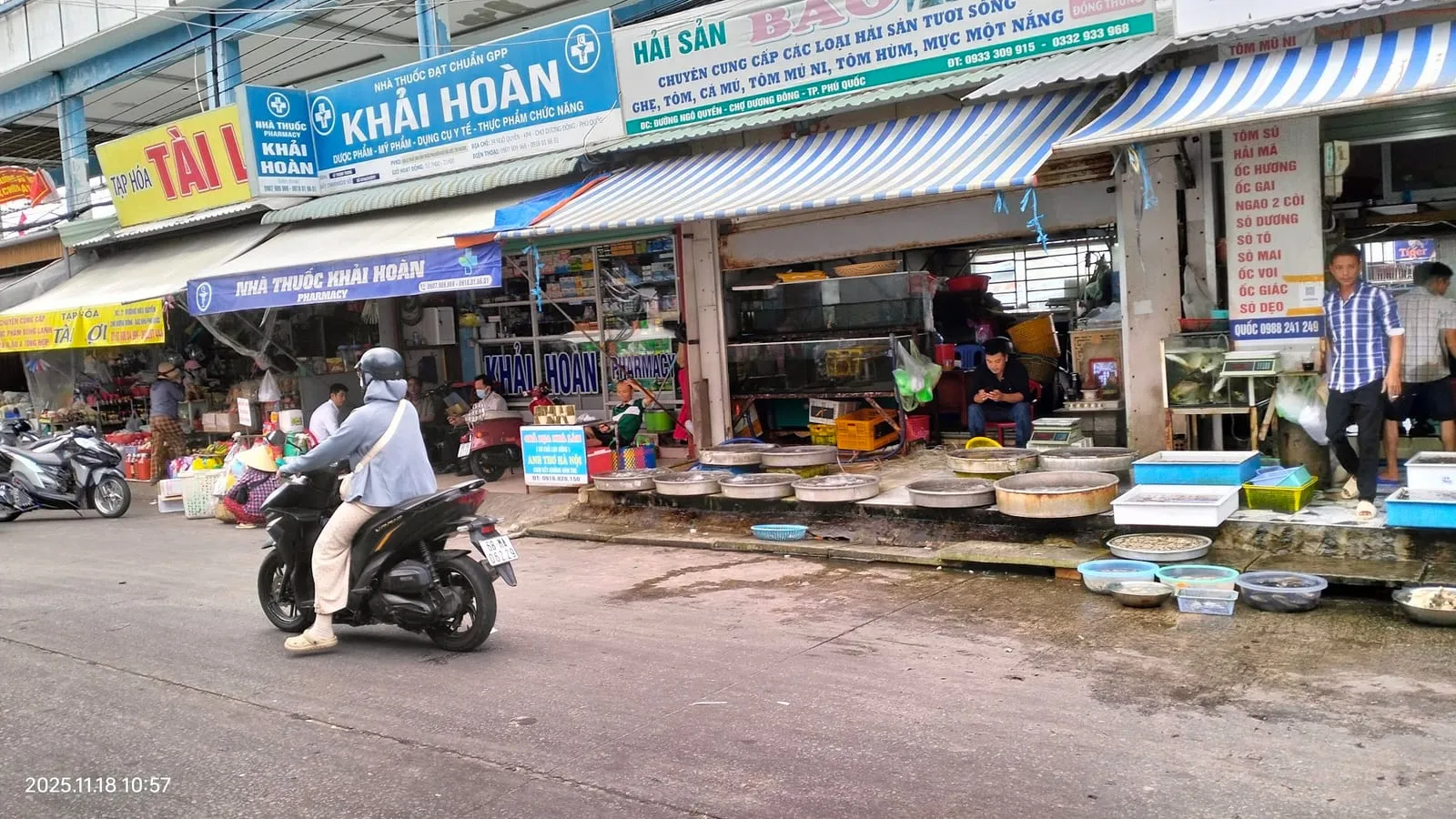
- Duong Dong Market — the wet market for fresh fish, fruit, vegetables and meat. Go early.
- Kingkong Mart, 141A Tran Hung Dao Street — the busiest supermarket on the island (4.4 from 5,250), open 8:00–23:30.
- TR Mart, inside TR Mall at Sonasea on southern Long Beach (4.4 from 299).
- Huong Dao specialty supermarket, 102 Tran Hung Dao Street — island products like pepper and fish sauce (4.0 from 533).
Imported food — cheese, wine, western brands — costs noticeably more than on the mainland because everything comes by ship. Local fish like herring, anchovy and squid is cheap; premium seafood like tuna, cobia and crab is not, as much of it is shipped to the mainland.
Working remotely
Phu Quoc’s 4G and fibre coverage is good in Duong Dong and Long Beach. There is a small coworking space — Nomads Seaview Coworking, 126A Tran Hung Dao Street (5.0 from 92 reviews) — and plenty of cafés along Tran Hung Dao where people work.
Everyday costs
For a visitor’s view — rooms by season, Grab fares, tickets and daily budgets — see how expensive is Phu Quoc.
SAMPLE COSTS:
- Vietnamese noodle soups (bun, banh canh, etc): around 30,000–60,000 VND (2026)
- Baguette sandwiches aka “Banh Mi”: around 20,000–35,000 VND depending on how much meat/eggs you want
- Beer: cheap for local brands and much more expensive for premium imported ones.
- Motorbike rental: around 120,000–200,000 VND per day. Long term rates are much cheaper.
- Housing: prices depend on the location and condition.
The cost of food and groceries is relatively cheap on Phu Quoc Island compared to western nations, especially if you buy your groceries from the few wet and dry markets found in and around Duong Dong Town, the largest one being the Duong Dong Market. If you prefer to shop at a “one-stop” grocery store, there are numerous “Mini Marts” located around town (see map).
Surprisingly seafood is relatively expensive on Phu Quoc, especially tuna, cobia, king fish, crabs, shrimp, etc as they are normally shipped to mainland Vietnam, but fresh herring (rich in Omega 3-6-9’s), black anchovies, clams, scallops, and squid are relatively cheap. Quality beef and pork is hard to find and best avoided if possible. Chicken is a good alternative meat and relatively healthy and affordable.
Eating out
The food prices in Phu Quoc are much lower than your home country but a bit more expensive than other places found in mainland Vietnam as Phu Quoc is an island and most items need to imported. Here is how some typical items compare:
- Vietnamese Beer: very cheap, and the price depends on the size.
- Imported Beer: Tiger and Heineken cost a little more than local beer, and German and Japanese beer costs a little more again.
- BBQ snails (1 plate): cheap.
- Garlic Rice: cheap.
- Seafood hotpot: one of the more expensive items on this list.
- Street food: cheap.
- Grilled or steamed squid: moderately priced.
- Sautéed noodles with vegetables: cheap.
- Barbecued Fish: one of the more expensive items on this list.
- Coconut: cheaper from street sellers than at the beach.

Laundry, phones and the rest
- Laundry: shops in Duong Dong and Long Beach charge by the kilo; hotels can arrange it too.
- Phones and SIM cards: Thế Giới Di Động and FPT Shop have branches in Duong Dong. Bring your passport to register a SIM.
- Getting things delivered: courier and delivery services reach the island from the mainland, usually in a few days.
Ratings and opening hours: Google Maps, October 2026. Legal requirements: Labour Code 2019 and Decree 219/2025/ND-CP — check the current rules before you rely on them.