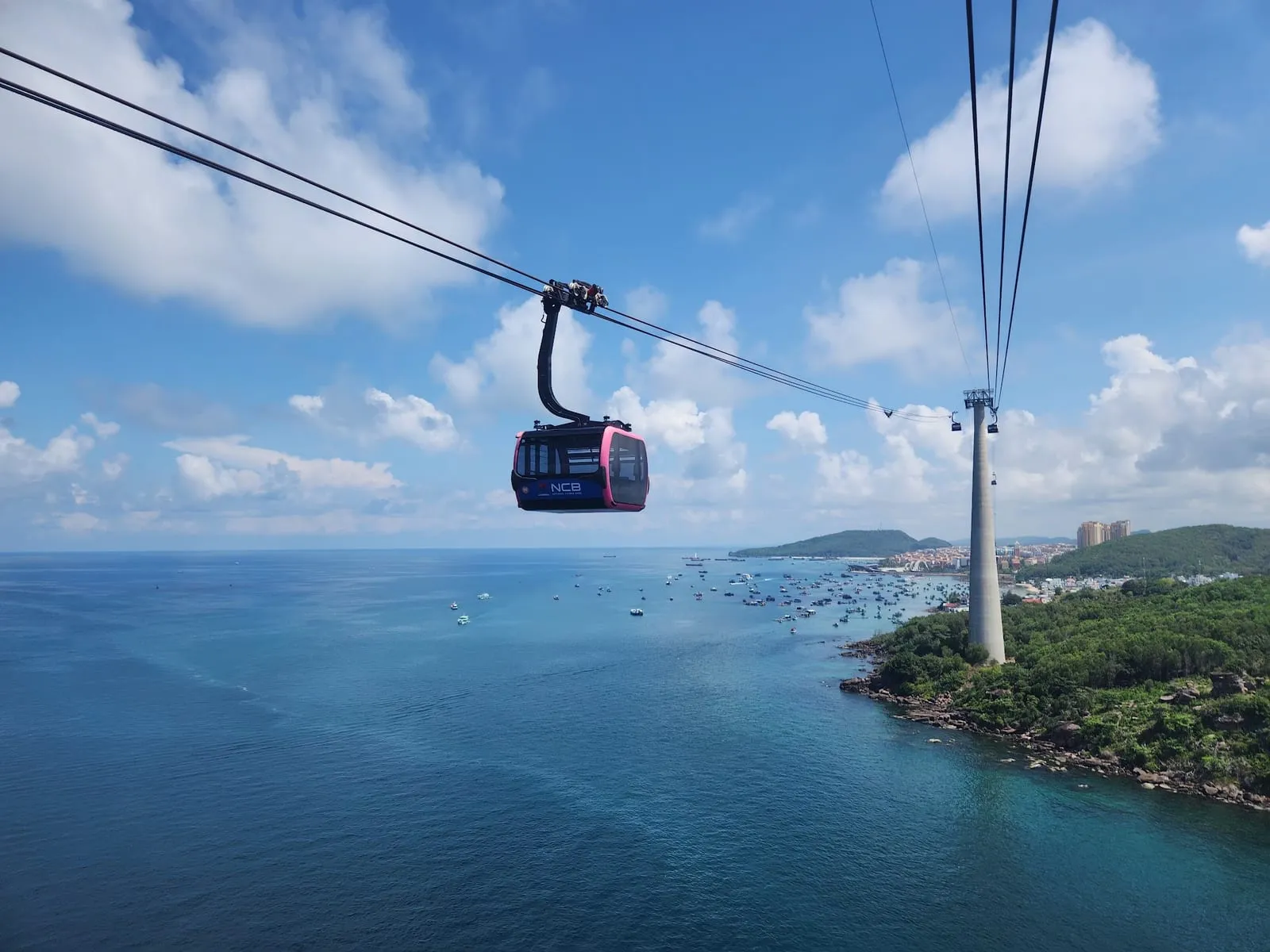
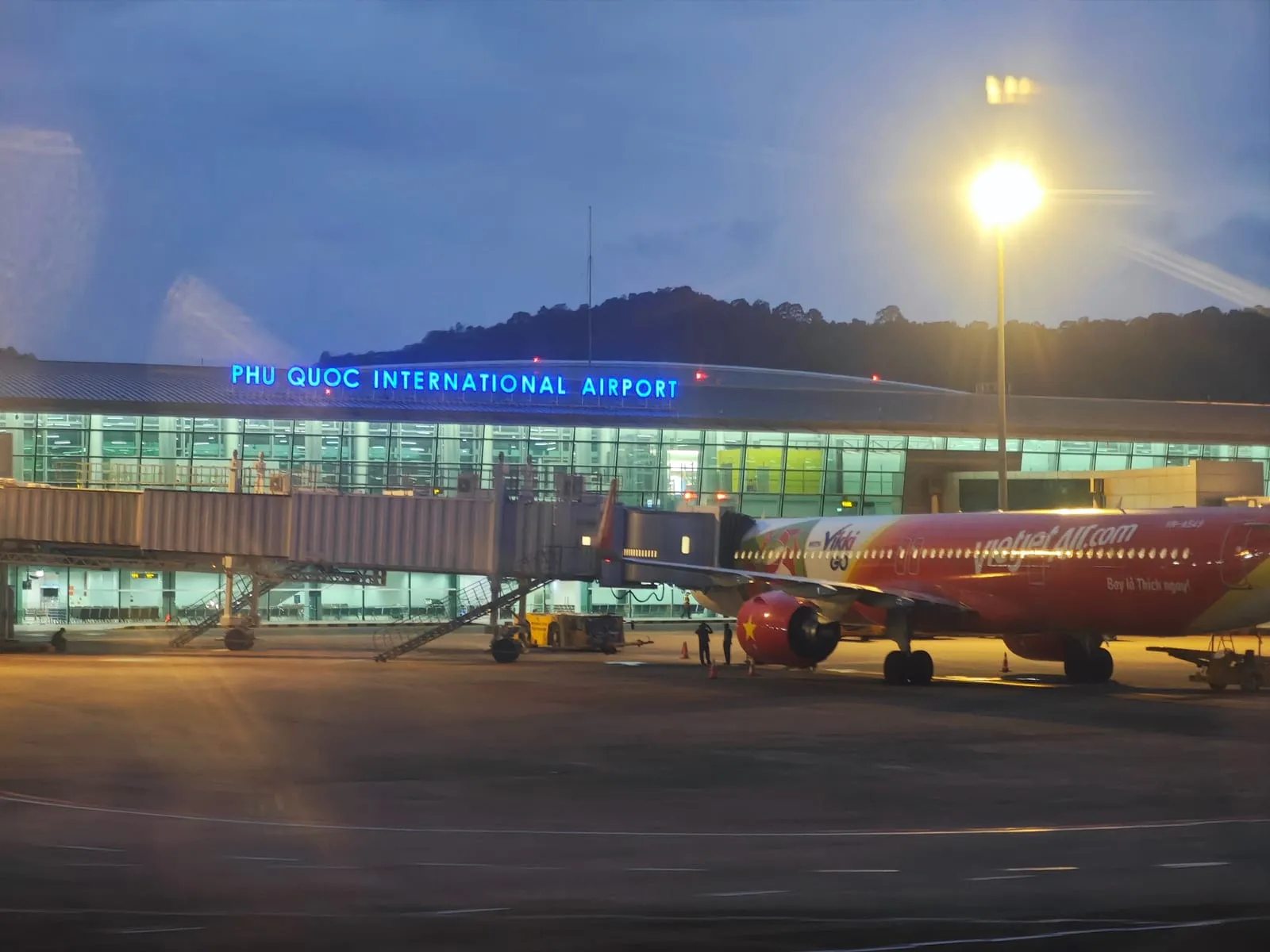
Do you need a visa for Phu Quoc? Not if you arrive on Phu Quoc from abroad and stay on the island for 30 days or less: every nationality gets 30 days visa-free, stamped into the passport on arrival, at no cost. You do need a visa or e-visa if you clear immigration somewhere else in Vietnam first, or if you want to travel on to the mainland. The details, and the traps, are below.
Three separate rules can get you onto Phu Quoc (Phú Quốc) without a visa arranged in advance: the island’s own 30-day exemption, Vietnam’s 45-day exemption for citizens of 24 countries, and the e-visa, which is not an exemption at all. They differ in how long you get, where in Vietnam you are allowed to go, and what you have to show at the counter. The expensive mistake is assuming the island exemption covers you when you come from Cambodia by ferry. It does not, and that is the part of this page worth reading twice.
Which route applies to you
| Phu Quoc exemption | 45-day exemption | E-visa | |
|---|---|---|---|
| Who it covers | Any nationality, including Vietnamese citizens travelling on a foreign passport | Citizens of 24 countries, in two groups with different conditions | Any nationality, any territory |
| How long | 30 days | 45 days | Up to 90 days, single or multiple entry |
| Where it is valid | Phu Quoc only | All of Vietnam | All of Vietnam |
| Cost | Free | Free | 25 USD single entry, 50 USD multiple entry |
| How you get it | Stamped into your passport on arrival, no application, no form | Stamped into your passport on arrival, no application | Applied for online before you travel, three working days |
| What you show | Passport. Airlines usually ask at check-in for a ticket off the island, though no Vietnamese instrument requires one | Passport with at least six months validity left | Your approved e-visa and the passport it was issued against |
| Legal basis | Art. 12(3a), Law 47/2014/QH13 as added by Law 51/2019/QH14, plus Resolution 80/NQ-CP of 25 May 2020 | Resolution 44/NQ-CP of 7 March 2025 and Resolution 229/NQ-CP of 8 August 2025 | Resolution 127/NQ-CP of 14 August 2023, Law 23/2023/QH15, Circular 28/2026/TT-BTC |
Visa rules verified August 11, 2026 against the Immigration Department’s e-visa portal and the resolutions cited above. Vietnam changes entry policy with little notice — check before you book.
We do not sell visas and we take no cut from anyone who does, which is why the table above tells you plainly when the free option beats the paid one. For most western European, Japanese, Korean and Russian passport holders, it does.
The Phu Quoc exemption: 30 days, island only
Foreigners entering Phu Quoc from abroad get 30 days of visa-free stay, whatever passport they hold. That includes Vietnamese citizens travelling on a foreign passport. There is no application, no fee and no quota — the officer stamps your passport at the gate.
The current legal basis is Article 12(3a) of Law 47/2014/QH13, added by Law 51/2019/QH14 with effect from 1 July 2020, together with Resolution 80/NQ-CP of 25 May 2020, which designates the Phu Quoc economic zone as the coastal economic zone where the exemption applies. If you have read elsewhere that the policy dates from 2005, that was the earlier 15-day version under Decision 229/2005/QĐ-TTg. Thirty days arrived with Decision 80/2013/QĐ-TTg of 27 December 2013, in force from 10 March 2014.
One naming note, because the paperwork is mid-transition: since 1 July 2025 Phu Quoc has been a special zone of An Giang province, not a district of Kien Giang — Resolution 202/2025/QH15 merged Kien Giang into An Giang, and Resolution 1654/NQ-UBTVQH15 of 16 June 2025 created the special zone. Resolution 80/NQ-CP and the e-visa border-gate list still print the old province name. Nothing about the exemption changes because of it.
What you actually have to qualify for
Less than you have probably read. The law asks that you meet the general entry conditions in Article 20 of Law 47/2014/QH13 and that you do not fall under Article 21, which lists the grounds for refusing entry. That is the whole legal test.
- Six months of passport validity is a real rule, but it belongs to the 45-day unilateral exemption further down this page, under Article 20(2). It is not a condition of the Phu Quoc exemption. Renew anyway if you are close, because check-in agents apply airline policy, not Vietnamese law.
- A return or onward ticket appears in Decision 80/2013/QĐ-TTg nowhere, in Law 51/2019/QH14 nowhere, and in Resolution 80/NQ-CP nowhere. Visa agencies list it and airlines ask for it at check-in. Carry proof you are leaving the island within 30 days because the airline wants it, not because the law does.
- Earlier versions of this page also listed “not previously extradited from Vietnam” and “not on INTERPOL’s wanted list” as conditions. Neither exists in that form in any instrument. Article 21 is the real list, and it is broader and vaguer than either.
The stamp, and the date to check before you walk away
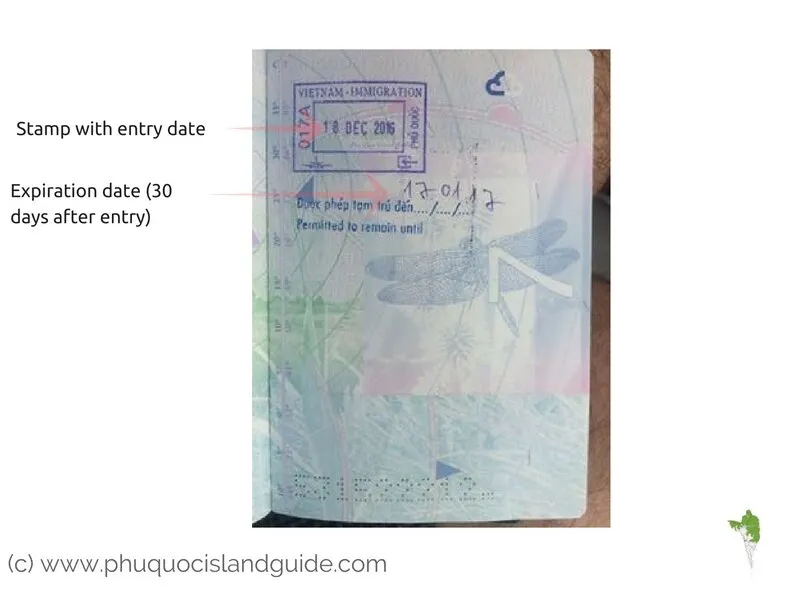
You get an entry stamp with the exit-by date written in by hand. Read it at the counter. That handwritten date, not your own arithmetic, is what a hotel front desk and any officer will go by later, and a misread digit is how people discover on day 31 that they were on day 33.
The exemption stops at the island
This is a permission to be in the Phu Quoc coastal economic zone, not a permission to be in Vietnam. The ferries to Ha Tien (Hà Tiên) and Rach Gia (Rạch Giá) are domestic sailings, and taking one to the mainland on an exemption stamp puts you in the country beyond what the exemption covers. Mainland hotels ask for passport and visa because they have to file guest details with the local police, so an exemption stamp and no visa gets you turned away at the front desk before anyone official is involved.
If you want the mainland, get an e-visa before you fly. Sorting it out from the island is possible, but it costs you days you had planned to spend somewhere else.
Do you have to fly in direct? No — but you have to stay airside
Two situations are covered. First, arriving in Phu Quoc directly from abroad, by air or by sea. Second, arriving at another Vietnamese international gate, remaining in the transit area of that gate, and continuing on to Phu Quoc. The Ministry of Foreign Affairs publishes the second case explicitly, and the sentence originates in Article 2 of Decision 80/2013/QĐ-TTg.
Now the limit, and weigh it before you book two separate tickets. The instruments currently in force — Law 47/2014/QH13 as amended by Law 51/2019/QH14, and Resolution 80/NQ-CP of 25 May 2020 — are silent on transit. They say nothing about flying direct and nothing about transit halls. The transit sentence lives in the older Decision 80/2013/QĐ-TTg and is still published by the ministry, so the conclusion “you need not fly direct” has A-grade backing. What has no document behind it at all is the other version of that itinerary: clearing immigration in Hanoi or Ho Chi Minh City, collecting your bags, and then boarding a domestic flight. At that point you have entered Vietnam proper, at a gate where the officer expects a visa, and no instrument protects the exemption you were counting on.
Practical version: book Phu Quoc as one through ticket with baggage checked to the island, and do not leave the transit hall.
The Cambodia ferry trap
Older versions of this page said a ferry from Kep or Kampot brings you straight into Phu Quoc under the exemption, skipping the land border. That is wrong, and it is the kind of wrong that gets someone refused at a border gate.
Ha Tien (Hà Tiên) is a land border gate in Vietnam’s official border-gate list. That makes the Ha Tien to Phu Quoc ferry a domestic route. So the real Kep or Kampot itinerary is: overland to the Prek Chak / Xa Xia (Xà Xía) crossing, entry into Vietnam at the Ha Tien land gate, then a domestic ferry. You entered Vietnam on the mainland. The Phu Quoc exemption does not apply to you, and the officer at Ha Tien will want a visa or a valid e-visa. There is no version of this route where the island exemption saves you.
Phu Quoc’s own international gates in the current e-visa list are two: Phu Quoc Airport, from Resolution 127/NQ-CP of 2023, and An Thoi (An Thới) port, added by Resolution 389/NQ-CP of 2 December 2025. That resolution brought the national list to 83 gates — 17 air, 27 land, 39 sea. No land gate leads onto an island, which is the whole reason the ferry story falls apart.
We could not verify any direct international ferry from Cambodia to Phu Quoc currently operating. The promise of a Sihanoukville route “in operation next year” sat on this page for years without ever becoming true, and it is gone. For what actually sails, see the ferry schedules and fares.
The e-visa in 2026
The e-visa is the workhorse, and almost everything written about it online is a version from before August 2023.
- Every nationality. Citizens of all countries and territories are eligible, since 15 August 2023, under Resolution 127/NQ-CP of 14 August 2023. The “40 countries” figure that used to be on this page was already stale in 2020 and meaningless from 2023.
- Up to 90 days, not 30. Article 9(2) of the immigration law caps EV-symbol visas at 90 days, per consolidated text 30/VBHN-VPQH 2023 as amended by Law 23/2023/QH15.
- Single or multiple entry, your choice on the form.
- 25 USD single entry, 50 USD multiple entry, and 10 USD to extend temporary residence, under Circular 28/2026/TT-BTC of 27 March 2026, in force since 1 April 2026. The fee is not refunded if your application is refused.
- Three working days from a complete application and paid fee, under Article 16b of the immigration law.
- Valid for the whole country, unlike the island exemption. You can also use it to fly in internationally to Phu Quoc Airport or arrive at An Thoi port.
There is one portal and one form: evisa.gov.vn. Anyone telling you to fill in two forms on two sites is quoting a setup that no longer exists.
Be careful which government page you land on. Vietnam’s previous e-visa page, still online on the old evisa.xuatnhapcanh.gov.vn domain and still ranking, says 30 days, single entry, 25 USD. It is out of date and we have deliberately not linked it. The rule of thumb: if a page says the e-visa is 30 days, distrust the rest of it too, .gov.vn or not.
Once your e-visa is approved, the portal recommends filing the pre-arrival declaration at prearrival.immigration.gov.vn before you travel. It is not a second visa and it costs nothing — it shortens the formalities at the gate, which on a full flight into Phu Quoc is worth the ten minutes it takes.
The 45-day exemption: 24 countries, two resolutions, one difference that matters
Twenty-four nationalities enter Vietnam visa-free for 45 days, go anywhere in the country, and pay nothing. But those 24 countries come from two different resolutions with different conditions, and every roundup we read flattened them into one line.
| Resolution | Countries | Purpose of entry |
|---|---|---|
| Resolution 44/NQ-CP of 7 March 2025, in force 15 March 2025 to 14 March 2028 | Germany, France, Italy, Spain, United Kingdom, Russia, Japan, South Korea, Denmark, Sweden, Norway, Finland | Any purpose of entry |
| Resolution 229/NQ-CP of 8 August 2025, in force 15 August 2025 to 14 August 2028 | Belgium, Bulgaria, Croatia, Czechia, Hungary, Luxembourg, Netherlands, Poland, Romania, Slovakia, Slovenia, Switzerland | Tourism only |
Read that second column again if your trip has any business in it. Resolution 229/NQ-CP sits inside a tourism stimulus programme, so a German flying in for meetings is exempt and a Dutch citizen flying in for the same meetings is not. If you are in the lower group and your trip is work, the exemption is not yours to use — buy the e-visa.
Both groups get 45 days from the date of entry, and both need a passport with at least six months of validity left, under Article 20(2) of Law 47/2014/QH13. Do not confuse the 45 days with the e-visa’s 90 — they are different instruments, and this page used to mix them.
The 30-day waiting period is gone. Older guides, including earlier versions of this page, said that after leaving Vietnam you must wait 30 days before re-entering under an exemption. That requirement was removed on 1 July 2020, when Law 51/2019/QH14 amended Article 20(2). It has been dead for six years. If a page still repeats it, it is old enough that you should not trust its numbers either.
Separately, and often confused with the above, Vietnam has bilateral exemption agreements, mostly within ASEAN: 30 days for citizens of Thailand, Malaysia, Singapore, Indonesia, Laos, Cambodia and Myanmar, and 21 days for the Philippines, per the Ministry of Foreign Affairs list. Different track, different lengths, nothing to do with the 45-day resolutions.
Which route to choose
- You hold one of the 24 passports above and you are travelling for tourism. Do nothing. 45 days, the whole country, free. It beats the island exemption on every axis, and this page spent years steering French, Japanese, Korean and Russian readers to the weaker option.
- You are in the Resolution 229/NQ-CP group and travelling for business. The exemption does not cover you. E-visa, 25 USD.
- Phu Quoc only, arriving by air or sea from abroad, 30 days or less, any nationality. Use the island exemption. Nothing to apply for, nothing to pay.
- You are adding Hanoi, Hoi An (Hội An) or Ho Chi Minh City, or staying past 30 days, or arriving overland through Ha Tien. E-visa, three working days, done before you fly.
- You are not certain you will leave within 30 days. E-visa. The island exemption cannot be extended, and sorting it out on the island costs more time than the 25 USD you saved.
If you are flying, the Phu Quoc Airport guide covers what happens after the stamp.
Extending, and what happens if you overstay
The 30-day Phu Quoc exemption cannot be extended. This matters because the language of “extending your visa for a fee” implies a form you can fill in. There is no such form for an exemption. What you can do is apply for a proper visa while you are on the island, which is a new permission rather than an extension of the old one.
The official fee for extending temporary residence is 10 USD per extension, under Circular 28/2026/TT-BTC. Any figure much above that is somebody’s service charge, and you are entitled to ask what it buys.
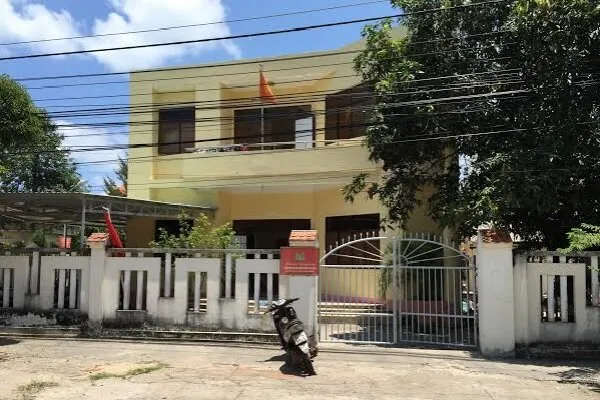
You apply at the immigration office in Duong Dong (Dương Đông), on 30 Thang 4 (30 Tháng 4) street at the corner of Mai Thi Hong Hanh (Mai Thị Hồng Hạnh), next to the police station — a yellow two-storey building set behind a gate. Agencies along Tran Hung Dao (Trần Hưng Đạo) in the Long Beach area also offer to handle it for you. Hours are posted at the gate; we are not reprinting the ones that used to be on this page because we could not re-check them.
Two processing times used to appear here: about 12 business days on the island, or five business days through an agent in Ho Chi Minh City. Both are gone. We could not trace either number to any source other than this page, and other sites now quote them back to us as fact — which is exactly how a wrong number outlives the person who typed it. A named agency and phone number in Ho Chi Minh City have gone with them, since we could find no evidence that business still exists.
On overstaying: do not. It gets dealt with at departure, at the airport, on the day you have a flight to catch and no leverage at all. We are not printing a penalty figure because we could not source a current one, and we are not going to guess at the procedure either. Count the days off the handwritten date in your passport and leave a margin.
Frequently asked questions
Q: Do I need a Vietnam visa to visit Phu Quoc?
A: Not if you arrive on Phu Quoc from abroad, by air or by sea, and stay 30 days or less on the island. That is the exemption, it is free, and it applies to every nationality. You do need a visa or e-visa if you enter Vietnam anywhere else first and clear immigration there, if you arrive overland through Ha Tien, or if you want to go beyond the island.
Q: I already have a Vietnam visa. Do I need anything extra for Phu Quoc?
A: No. A valid Vietnam visa or e-visa covers the island like any other part of the country. The exemption is an alternative for people without one, not an additional requirement.
Q: What does the exemption look like in my passport?
A: An entry stamp with a handwritten exit-by date, as in the photo above. No sticker, no separate document, nothing you carry apart from the passport itself.
Q: Can I take the ferry to the mainland on an exemption stamp?
A: Physically yes, lawfully no. The exemption covers the Phu Quoc economic zone, so stepping off a ferry in Ha Tien or Rach Gia puts you in Vietnam without a permission that covers you. Mainland hotels register foreign guests with the police and will ask for your visa at check-in, so in practice the trip ends at the first front desk.
Q: I am already on Phu Quoc with an exemption stamp and I want to see the rest of Vietnam. What now?
A: You apply for a visa on the island rather than extending the exemption. Start at the immigration office in Duong Dong; agencies on Tran Hung Dao will also file it for a service charge. Plan for it to take days rather than hours, and do not book onward mainland travel until the passport is back in your hands.
Q: I am in Vietnam on the 45-day exemption. Can I fly to Phu Quoc and pick up another 30 days?
A: No. The island exemption applies on entry into Phu Quoc from abroad. A domestic flight from Hanoi is not an entry, so nothing new gets stamped. If your 45 days are running out, deal with it as a visa question before it expires, not by flying south.
Q: I read that Vietnam now has a five-year visa. Can I get one?
A: Almost certainly not. Decree 221/2025/NĐ-CP of 8 August 2025 allows visa exemption of up to five years, but only for defined special categories — high-level guests, scientists, high-technology experts, major investors, executives of the world’s largest companies, notable cultural and sporting figures, honorary consuls — and it is applied for by a sponsoring organisation to the Immigration Department. There is no version of it for ordinary tourists.
Q: Do I need travel insurance or a vaccination certificate for the exemption?
A: Neither is a condition of the exemption in any instrument we could find. Insurance is still worth having, but for the risks that actually catch people out here — rented motorbikes and hospital transfers to the mainland — not for immigration. What to watch for on the ground is in the scams and island safety guide.
For flights and ferries, and how your route affects the visa rule, see how to get to Phu Quoc.